

Mongrel, p.1
Mongrel, page 1


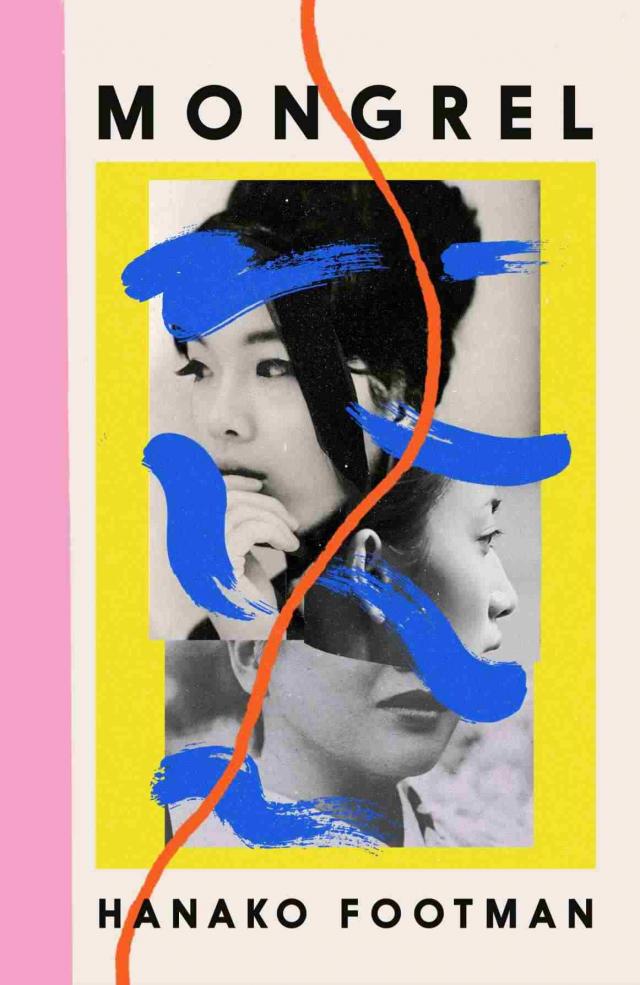
MONGREL
First published in 2024 by
Footnote Press
www.footnotepress.com
Footnote Press Limited
4th Floor, Victoria House, Bloomsbury Square, London WC1B 4DA
Distributed by Bonnier Books UK, a division of Bonnier Books
Sveavägen 56, Stockholm, Sweden
Copyright © by Hanako Footman 2024
The right of Hanako Footman to be identified as the author of this work has been asserted in accordance with the Copyright, Designs and Patents Act 1998
No part of this publication may be reproduced, stored in a retrieval system, or transmitted in any form or by any means without the written permission of the publisher, nor be otherwise circulated in any form of binding or cover other than that in which it is published and without a similar condition being imposed on the subsequent purchaser
A CIP catalogue record for this book is available from the British Library
ISBN (hardback): 978-1-804-44043-8
ISBN (trade paperback): 978-1-804-44050-6
ISBN (ebook): 978-1-804-44044-5
For Mama, Papa, Eri and Miki.
For you.
MONGREL
a dog of no particular breed.
an animal resulting from the crossing of unknown or different breeds.
OFFENSIVE
a person of mixed descent.
Build a thought up to a healing house
Contents
As Seen from Above
Part One
Mei
Yuki
Mei
Yuki
Mei
一
Yuki
Mei
一
Yuki
一
二
三
Mei
The Princess & The Pomegranate
Yuki
一
Mei
一
二
Yuki
一
二
三
Yuki
一
二
三
四
五
The Little Boat
Part Two
Haruka
一
二
三
四
五
六
七
八
九
Part Three
Mei
Haruka
Mei
一
Haruka
Mei
Haruka
Mei
Part Four
Haruka
Mei
Haruka
Mei
Haruka
Mei
Haruka
Mei
Haruka
Part Five
Yuki
一
二
三
四
Part Six
Haruka
Mei
Yuki
Haruka
The Fox-Woman
Haruka
Meiko
Acknowledgements
About the author
As Seen from Above
A grove of bamboo trees, thick in their numbers, and dark clusters of thin, hardy canes, growing in clumps, creating circular spaces between them, hollowed out by God. The bamboo sways above the girls, a circle of dirt where secrets are made. On one side, a wooden fence, high and dry, the texture of a coconut shell; the other, a thickish wall of young trees, dense enough to stay unnoticed if quiet. The leaves cast a green hue in the shadows all around them. A shandy lies beside their feet, bought at the newsagent. Half drunk on a half-drunk. Or so they tell themselves. They stand. In the quiet of the growth. Their desire closed in, and all around. The leaves shimmer, urging them on. The taste of that pomegranate lip balm, organic, and that shampoo from Australia. They bend. Down onto the dirt, the sandy brown. The bamboo canes see all. The inexperienced hands, searching for their purpose, heavy breathing, real—not fake like they will learn to do. Real and soundless. Allergies and excitement. Skin so soft, everything about them soft, though they don’t know it. Roaming the seams of American Apparel. And the bamboo sings—you are safe, you are safe, you are safe. An eyelash is eaten. A part of her now inside you. They don’t tongue like the boys, muscular and rhythmic. They kiss. Wet. More lemonade than lager. There they are on the earth as a finger finds its way. And there is pleasure, even though they are scared. Lying there in the sandy earth. Here, they are trees. Their roots find each other. Under all the weight, the mud that cases them in, they find each other. They lift off the earth. The shandy can now overturned, spilling itself, flowing. They lift off the dirt, they are sure of it. Sandals bought in Italy, dangling, friendship bracelet made of thread, dangling, as a finger turns into life itself. As a finger holds all the strength of the world. As a finger lifts them off the dirt, that Saturday afternoon in the autumn.
Listen . . . The bamboo canes are singing.
Part One
Mei
From a young age Mei tried very hard to be a good girl. If she transcended her fellow pigtails, then (at least) the teachers might like her. If she focused on her violin, she wouldn’t have to focus on her dead mum.
That morning, like every Friday morning before Mother’s Day weekend, Mei had woken wishing she was sick. She knew that during form time the other girls at school would be crafting cards with gel pens and pompoms, cutting stiff white paper into the shape of the word mummy —ready to claim the mantel of their parents’ six-bed suburban estate. Mei, whose artistic efforts would be wasted, had scheduled a singing lesson in its place. She didn’t have time to make silly cards because she was serious and wore a house leader badge to prove it—iridescent and lovingly shined with globs of spit when no one was watching.
From first period to well past lunch, Mei avoided feeling much of anything, too consumed with the rolling heads of Henry’s wives, the chasms between tectonic plates, splitting land masses, creating continents. The urgent clamour of the corridors and lunch halls bludgeoning any moments of grief that threatened to burst through. It is only later, when she is walking to her singing lesson, alone, that the feelings finally surface. Beneath the wiry plane trees, across the hard tarmac, Mei feels the sharp loss of her mother. It reveals itself to her, through the tree tops, the open sky, the dreadful March light stripping her. She crosses the empty road without waiting for a green light. Putting distance between herself and the other girls, with their French plaits and train tracks. She takes the narrow staircase, two steps at a time, up to the windowless music room. As she reaches the door, she reads a note tacked to the dark wood:
Mrs Selwin unavailable—all lessons cancelled!
Mei imagines her teacher finally in the throes of childbirth—white-knuckled, legs splayed, pushing out a bloodied baby.
During a warm-up last week, Mrs Selwin had told Mei about third-degree tears from the vagina to the anus, while hugging her stomach, belly button protruding through black polyester. Like most of the adults in Mei’s life, Mrs Selwin would often confuse Mei’s premature grief with wisdom, and talk to her about things any thirteen-year-old might obsess over with a dark curiosity. The day Mrs Selwin told Mei about the tear— something Mei imagined to be a seismic hole of black and blood—was the day she vowed never to let anyone put a baby inside of her. She would stay virginal. Be like Mary, a vision of piety and teal.
Mei tries the handle but the door is locked. She would have liked to have shut herself away, practised her Éponine or Cosette. Instead, she locks herself in a toilet cubicle until bell. Carefully selecting the one with the fewest blood-caked sanitary pads sticking out of the bins. Sanitary. Your blood is dirt, girls . Mei’s period had rudely arrived two years ago, when she was eleven years old: a school trip to the ballet, Romeo and Juliet , her hands shaking as she sees the red in her white cotton pants with the weekdays printed on them; her teacher, fake-tanned and kind, handing her a sanitary towel, followed by a joke made by Esme, something about sitting on strawberry ice cream. And Mei’s quiet pride—finally a woman.
She lowers down onto the cold seat of the toilet, and studies a smear of discharge in her pants. A trickle of pee escapes, pattering into the water, the sound pathetic against the quiet of the bathroom. As Mei wipes herself, she thinks of her father. Back home from the ballet, standing in the cool white of the kitchen, she had told him about the bleeding. Mei liked to push his limits, test how he’d react to the word period . She could have shared the news with the woman of the house—her stepmum, Matilda. But Mei had never given her the privilege of maternal intimacy. Her father’s eyes had turned watery when she told him about the blood.
Opening the bathroom cupboard where Matilda kept her Tampax, he had said,
You’re all grown up.
In a voice that was thick with something like grief. His words had hung in the air. Marking the beginnings of a divide that would separate father from child, child from childhood.
Curling up on the sofa with a hot water bottle and a cheese toastie, watching The Simpsons at six o’clock, Mei had whispered to herself,
I’m not grown up. I’m just growing.
She had wanted her mother then. To explain the heavy ache of womanhood. To elucidate the likelihood of a lost tampon string. Toxic shock syndrome.
Mei had few clear memories of her mother, but the ones she did have she returned to repeatedly. They were scraps, a collectio n of moments that she clung to—slippery and fractious, with nothing solid to them. Memories mostly formed at her grandparents’ rice farm in Japan, when she was six years old.
Mei remembers the farmhouse as squat and peeling, with wooden floors and low ceilings, the upper rooms smelling dry with sunlight. The house seemed to contain things made only of plastic or wood: woven baskets, pastel-coloured washing pegs, yellow rubber gloves, hinoki scented drawers, shallow pink buckets in the bathroom. Over the hill behind the house was the spread of rice fields. The shy green shoots poking out of the waters. Where swathes of gold shift in the heat come harvest time. Mei remembers the warm softness of Mama’s hands, lifting her into the cool shallows of a paddy. The reflection of the clouds in the water, glassy in the low setting sun. Skittish dragonflies skimming the surface. The surrounding air heavy with the thrum of cicadas. The rice balls they ate, wrapped in nori with pink sour plums in the middle. Mei would devour the sour heart, then hand the fleshy leftovers to Mama to finish. She loved to eat her mother’s food, to be praised for eating things children were supposed to hate. Stringy natto mixed with a raw egg. Deep-fried oysters.
There was a certain smell that belonged to the bathroom of that house. A warm, moist smell that was clean and comforting. Towels drying above an electric heater. A smell that would return to Mei in the most unremarkable of places, and nudge her back into her mother’s arms.
At night Mei would lie on the floor between Mama and Papa—that was what she had called her father back then—surrounded by darkness, seeing shapes in the grainy pitch. The buckwheat-filled pillows scenting the air, the rough towels in place of a duvet. For that entire month of July, Mei had woken to the embrace of fresh pastries, warming in the toaster oven. Sweet milk buns, fluffy pockets of curry pan.
It was at breakfast halfway through the holiday that Mei had finally been allowed to try her mother’s cup of tea. The hip of the saucer pressed against her tongue as the warm liquid tipped into her mouth. Even after years of dogged tea drinking, both loose leaf and bagged, that first taste of tea, lovingly poured from her mother’s cup into a saucer to cool, would be the most delicious she would ever have. After that, every morning began with Mei dipping hunks of snail-shaped brioche into the milky liquid, until the bread was slurpy and soaked, rivulets running down her chin and onto the table. Her grandparents playfully chiding her for making a mess—and though she could not understand their fast words, she understood their smiles, their laughter, and that, back then, was enough.
Her grandparents lived on in her mind mostly as a collection of body parts. Oba-chan’s hands, brown and puckered and surprisingly strong. Oji-chan’s duck-like feet divided into his black tabi boots, covered in crusted earth.
At the time Mei had spoken to her grandparents in Japanese with the confidence of a child.
Words like,
Oshikko, Nemui, Oyasuminasai.
Words that fell out of her mouth with ease. Words from her mother’s mouth, formed in her childhood. Words she had mostly forgotten now.
Neighbours and strangers alike would gather around her and call her kawaii . A soft, mewling word that gave Mei a kind of arrogance. The locals had fawned over her, taking photos, marvelling at her ‘honeyed’ hair, her western features. Her little nose flanked by budding lips and dark, curious eyes. It had been a shock, after a month of special attention, to return back to England only to be treated like any other child.
It wasn’t until she was older that she noticed how that attention was still there, only in reverse. It was cruel, the colour of tarmac and misery. She noticed how some teachers never made the effort to pronounce her name correctly, complaining about the complexity of a two-syllable word. It wasn’t long before Meiko shortened her name to Mei, so that it would be easier for the teachers to like her. The other children in the playground and lunch lines were less forgiving. They would pull at their eyes, stretching them thin, up and down, chanting,
My mum’s Japanese,
My dad’s Chinese,
So I ended up like that!
They would point and laugh at Mei, and she would laugh too, though she would ache inside.
It was in those moments that she learnt to hide her mother in her. She learnt the hatred of others and schooled herself until it was her own.
The bathroom door kicks open. Mei holds her breath. She listens as a faceless girl in grey uniform clomps to a cubicle and unburdens herself into the toilet. Piss hissing against the sides of the bowl. The girl flushes. Leaves without washing her hands.
It was after the summer in Japan that Mei started wetting the bed. It was a nightly occurrence and, according to the string of therapists she would later see as an adult, linked to the stress of being separated from her mother.
They had said goodbye on a spit of platform, waiting for a train. Mama had gripped her with an intensity that had frightened both of them, while Mei had cried—her fingers white and desperate— clutching a book of Japanese fairy tales wrapped in brown paper. A parting gift.
I’ll be home soon, Mama had said.
If only Mei had known it would be their final goodbye. She would never have taken her father’s hand and let herself be led onto the train carriage. She would have clung to Mama, thrown herself onto the tracks—anything to stop the wrench of separation.
Instead, Mei had tried to be brave. Pressed up against the glass of the window, she had waved goodbye. Offering up a half-smile, as the wheels groaned away from the centre of her world. Her mother’s face, warped with grief, shuddering past, blurring to fields of nothing. Mei had been certain she would evaporate without her. Crumble into the seat of the train. Her father had tried to comfort her, but, as usual, that was nothing. She felt stolen. And, at the same time, entirely responsible for her mother’s sadness. It weighed on the soft convex chest of a six-year-old Mei. That feeling, she would discover, was the gnaw of guilt. It would soon follow her into classrooms and kitchens and car journeys. Anywhere she felt redundant.
Back in England, with the night light on, Mei would sit with the pages of the Japanese fairy tales. A book that had belonged to Mama, and to Oba-chan before her. The intricate lines of the script were impenetrable to Mei, but the illustrations of the princesses, pomegranate trees, the ships at sea, kept her faraway and held. They were strange drawings, frightening in parts. Mei scoured them every night for answers, searching for her mother in the dark corners, in the crooked smile of a painted fox.
At playdates, the other children would ask her where her mummy was, and Mei would regale them with wild, fantastical stories of monsters and devils, heaven and hell—the heady combination of fairy tales and Catholicism colouring her fantasies. It wasn’t long after, in the beige living room of the big new house that belonged to Matilda, that her tearful father sat Mei down and told her that Mama had passed on.
The banshee shrill of the end-of-class bell shrieks through the empty toilets. Mei blows her nose. Pulls up her pants. Conceals the redness with a Superdrug Rimmel. She walks into the classroom, but no one takes any notice. No one tells her the concealer isn’t blended properly or that her smile looks more like a grimace. Mei grabs her files and textbooks out of her locker, locking away her sad-girl stench with the unsung Les Mis numbers. She watches Emma and Cecily, leggy and shoving, push each other through the door.
*
After school, Mei walks past the bus stop full of boys in red uniforms, who tease her and call her names that fill her with doubt. The same boys that follow her to her door, forcing a kiss. This is before she learns to say no in a way that sounds like a maybe . That time will come, but it is a long way off. For now, Tom DeCoste kneads her small left breast beneath her white school shirt. The one her father irons for her on a Sunday evening. He touches her and she blushes. Not because he is invading her, but because she feels embarrassed for being so unimpressively small. She lets him touch her and practises the art of abandoning herself and, later on, as she gets out her house key, relieved that there will soon be a door between them, Tom will turn to her and make a joke about her lot .






