The proving ground, p.1
The Proving Ground, page 1


Also by Michael Connelly
Fiction
The Black Echo
The Black Ice
The Concrete Blonde
The Last Coyote
The Poet
Trunk Music
Blood Work
Angels Flight
Void Moon
A Darkness More Than Night
City of Bones
Chasing the Dime
Lost Light
The Narrows
The Closers
The Lincoln Lawyer
Echo Park
The Overlook
The Brass Verdict
The Scarecrow
Nine Dragons
The Reversal
The Fifth Witness
The Drop
The Black Box
The Gods of Guilt
The Burning Room
The Crossing
The Wrong Side of Goodbye
The Late Show
Two Kinds of Truth
Dark Sacred Night
The Night Fire
Fair Warning
The Law of Innocence
The Dark Hours
Desert Star
Resurrection Walk
The Waiting
Nightshade
Non-fiction
Crime Beat
Ebooks
Suicide Run
Angle of Investigation
Mulholland Dive
The Safe Man
Switchblade
The characters and events in this book are fictitious. Any similarity to real persons, living or dead, is coincidental and not intended by the author.
First published in Australia and New Zealand by Allen & Unwin in 2025
Copyright © Hieronymus, Inc., 2025
All rights reserved. No part of this book may be reproduced or transmitted in any form or by any means, electronic or mechanical, including photocopying, recording or by any information storage and retrieval system, without prior permission in writing from the publisher. The Australian Copyright Act 1968 (the Act) allows a maximum of one chapter or 10 per cent of this book, whichever is the greater, to be photocopied by any educational institution for its educational purposes provided that the educational institution (or body that administers it) has given a remuneration notice to the Copyright Agency (Australia) under the Act.
Allen & Unwin
Cammeraygal Country
83 Alexander Street
Crows Nest NSW 2065
Australia
Phone: (61 2) 8425 0100
Email: info@allenandunwin.com
Web: www.allenandunwin.com
Allen & Unwin acknowledges the Traditional Owners of the Country on which we live and work. We pay our respects to all Aboriginal and Torres Strait Islander Elders, past and present.
ISBN 978 1 76147 340 1
eISBN 978 1 76150 721 2
Cover design: Luke Causby/Blue Cork
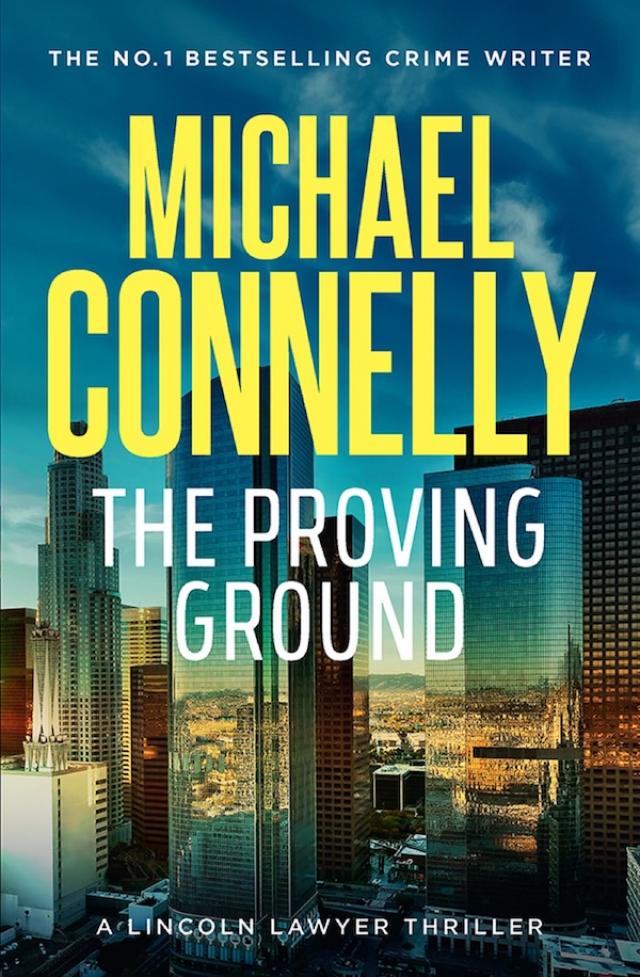
Cover photograph: Volodymyr/Adobe Stock
For Daniel Daly and Roger Mills, for twenty years of patiently answering the questions
We are engaged in a race against time to protect the children of our country from the dangers of AI. Indeed, the proverbial walls of the city have already been breached. Now is the time to act.
— National Association of Attorneys General,
September 6, 2023
Contents
PART ONE: THE CAGE
1
2
3
4
5
6
7
8
9
10
11
12
PART TWO: CHALLENGER
13
14
15
16
17
18
19
20
21
22
23
24
PART THREE: THE FIRST LAW
25
26
27
28
29
30
31
32
33
34
35
36
37
38
39
40
41
42
43
44
45
46
47
48
49
50
ACKNOWLEDGMENTS
ABOUT THE AUTHOR
PART ONE
THE CAGE
1
TO SOME IT’S a stage. A place where carefully choreographed drama takes place. To others, a chess match with moves designed and practiced weeks and sometimes months in advance. Where nothing is left to chance. Where the wrong moves have grave consequences and finality. Where the recruited audience sits in silent judgment with their hidden biases and contempt.
I have never thought of it that way. To me it’s the Octagon, where mixed martial arts are deployed in brutal combat. Two go in; one comes out the victor. No one is left unbloodied. No one is left unscarred. This is what the courtroom is to me.
The hearing on this day was in civil court, a misnomer if there ever was one. There was nothing remotely civil about this fight. Randolph versus Tidalwaiv Technologies LLC was one of those rare cases where the stakes went far beyond the walls of the courtroom or even the reach of the federal court for the Central District of California. This was a fight for the future of everyone — or at least that was how I would argue it.
It was a pretrial hearing before US district court judge Margaret Ruhlin. I had known her since her days as a member of the local defense bar, back when she was called Peggy Ruhlin and hung out after court hours at the bar at the Redbird. She was now a veteran and much respected jurist appointed to the bench during the Obama years. She had consolidated cross-complaints from the parties and was attempting to avoid a trial delay by refereeing the disputes. I was in favor of that but the lawyers at the other table, the Mason brothers, would have liked nothing better than to push the trial off for another few months or more. Tidalwaiv was for sale and its investors were hoping one of the big techs would swallow it. The three Ms were circling — Microsoft, Meta, and Musk. This trial and its outcome could be the difference between millions and billions.
I was determined not to let them delay. Tidalwaiv had turned over twelve terabytes of discovery — enough when printed out to literally line the walls of a warehouse with file boxes. But what was important in those thousands and thousands of pages was heavily redacted, making the documents virtually useless to me. I needed to find what they were hiding in those pages or I was going to lose the most important case of my life.
The judge was patiently waiting for my response to one of the Masons, who had stood up and claimed that the redactions in the discovery materials were necessary because of proprietary protections in the very competitive world of generative artificial intelligence. He said that the information withheld from me amounted to the keys to the kingdom. And they weren’t going to give them away.
“Mr. Haller,” the judge prompted. “Your response, please.”
“Yes, Your Honor,” I said.
Following the judge’s courtroom protocol, I stood and went to the lectern located between the tables for the plaintiff and the defendant.
“Your Honor, the defense’s argument is specious at best,” I began. “We are not talking about the keys to the kingdom here. We’re talking about key evidence that is being withheld because, as Mr. Mason well knows, it is inculpatory. It supports the plaintiff’s case. Tidalwaiv’s creation told an impressionable young man to take his father’s gun to school and — ”
“Mr. Haller,” the judge interrupted. “It is not necessary for you to repeat your cause of action with every objection. I am sure the media you invited here today appreciates it, but the court does not.”
The judge gestured toward the front row of the gallery, where members of the media sat shoulder to shoulder. Cameras and recording devices were not allowed in federal court. Each reporter, even the TV people, was reduced to taking notes by hand. And at the end of the row was a courtroom artist sketching yours truly for CNN. Pen and paper seemed so antiquated in a world where the electronic media reigned, along with its coconspirators artificial intelligence and the internet.
“Thank you, Judge,” I said. “The point is, this case is about guardrails. Tidalwaiv says they had guardrails in place but won’t reveal them, because they are allegedly proprietary. That doesn’t wash, Your Honor. The plaintiff is entitled to understand how Tidalwaiv’s artificial-intelligence-generated creation jumped those guardrails and told a teenager it was okay to shoot people.”
The Masons stood up in unison to object. They were alone at the defense table, their client choosing not to send a representative to court for these pretrial skirmishes.
The twins conferred and then Marcus sat down, leaving Mitchell to state their argument.
“Your Honor, the plaintiff’s attorney is once again misstating the facts and evidence,” he said. “He is talking to the media, not the court.”
I quickly shot back, since I was still at the lectern.
“How do we know the facts and evidence if they won’t provide complete discovery materials?” I asked, my arms out wide.
Ruhlin held her hands up in a signal for silence.
“Enough,” she said. “Mr. Mason, please move to the lectern.”
I retook my seat next to my client, Brenda Randolph, who had tears on her cheeks. Any reference made in court to her murdered child brought tears. It wasn’t a show. It wasn’t coaching. It was genuine loss and grief that would never go away no matter what happened down the line in this courtroom. I reached over and put my hand on her arm to console her. I needed to pay attention to the judge and my opponents but knew how difficult these moments were for her and that they would only get harder as the trial proceeded.
“Mr. Mason, the court tends to agree with Mr. Haller in this matter,” Ruhlin said. “How do you propose we rectify this issue? He is entitled to full discovery.”
“We can’t, Your Honor,” Mitchell Mason replied from the lectern. “Rather than reveal our proprietary sciences, codes, and methods, we have offered the plaintiff a generous settlement package, but that was rejected so that the plaintiff’s attorney can continue to grandstand in front of the media with his wholly unsubstantiated claims and — ”
“Let me stop you right there, Mr. Mason,” the judge said. “Every plaintiff has the right to a trial. We’re not going to go down the road of judging motivations for settling or not settling this case.”
“Then, Your Honor,” Mason countered, “we are happy to submit to a court-appointed special master to review the materials we have provided and determine what is discoverable and what should remain redacted as proprietary.”
Now I stood to object, but the judge ignored me.
“I will reluctantly consider the offer in light of what that would mean to the court’s calendar,” Ruhlin said. “But for now, let’s move on to our next issue. Mr. Mason, you — ”
“Your Honor,” I said. “Before moving on, may I respond to the defense’s proposal of a special master?”
“Mr. Haller, I know your response,” Ruhlin said. “You object because you want to keep this case on course to trial. If you wish, you may electronically submit a cogent objection, and I will take it into consideration before I rule. For now, let’s move on. The defense has a motion before the court to strike one person from the plaintiff’s preliminary witness list. A person named Rikki Patel, who is a former employee of the defendant, Tidalwaiv. Mr. Mason, do you wish to state your claim for the record?”
Mitchell Mason was wearing a blue-black Armani suit with his signature patterned vest to complete the power ensemble. He had styled but short brown hair and a close-cropped beard just beginning to show some distinguished gray. That was how I told them apart. Mitchell had the beard. Marcus did not.
“I do, Your Honor,” Mitchell said. “As stated in the motion, Mr. Patel is a former employee of Tidalwaiv and upon leaving the company’s employ signed a nondisclosure agreement, a copy of which was submitted with the motion. Your Honor, very simply, this is the plaintiff’s attempt to do an end run around us and get proprietary company data and information, and we object strenuously to Mr. Patel even giving a deposition, let alone testifying in open court in this matter.”
“Very well, you may take a seat,” Ruhlin said. “Mr. Haller, I notice that you didn’t file a response to the motion. Are you withdrawing Mr. Patel from your witness list?”
I moved back to the lectern.
“On the contrary, Your Honor,” I said. “Rikki Patel is a key witness for the plaintiff. He was in the lab when this company birthed the AI companion they call Clair and set her loose on unsuspecting — ”
“Enough with the sound bites, Mr. Haller,” Ruhlin barked. “I have warned you. You play to me, not the people in the first row.”
“Yes, Your Honor.”
“Now, why should the court not enforce the nondisclosure agreement signed by your intended witness?”
“Your Honor, in essence, this is a product-liability case and it is contrary to the public interest to bar a former employee from testifying about Tidalwaiv’s recklessness regarding the safety of its product. California courts routinely refuse to enforce nondisclosure agreements, because they violate fundamental public policy. My client and the public are not party to the NDA and they have an interest in learning the facts and circumstances regarding how an AI companion encouraged a teenage boy to kill his ex-girlfriend. Rikki Patel isn’t a witness who will divulge trade secrets or privileged information; he will testify about Tidalwaiv’s failure — ”
“But last I checked, we were in federal court, Mr. Haller. Not California court.”
“That may be so, Judge, but the court should also know that the NDA was signed under duress. Mr. Patel was fearful that if he did not sign it upon leaving the employ of Tidalwaiv, there would be consequences for himself and his family.”
Marcus Mason stood and objected, raising his hands, palms up, in a Where did this outlandish claim come from? gesture.
“Hold right there, Mr. Mason,” the judge said. “That is a very strong statement, Mr. Haller. Again, I warn you, meritless statements made for the benefit of the media and the jury pool will not be tolerated by this court.”
“Your Honor,” I said, “Mr. Patel is ready to testify in chambers or in open court about the fears and pressures that led him to sign an NDA with language that is threatening in and of itself. He should not be bound by the document, and I can assure the court that his purpose as a witness is not to reveal the proprietary information the company seems so concerned about. He will testify about the objections he raised about the Clair project from the very start. Objections that were overruled and that the company clearly doesn’t want the public to know about.”
“Your Honor?” Mason said, in case the judge had forgotten he was standing in front of her.
“Go ahead, Mr. Mason,” Ruhlin said.
I went back to my table and Marcus Mason took the lectern. He was the clean-shaven twin who wore bow ties rather than patterned vests with his Armani.
“Your Honor, this is trial by ambush,” he said. “Nothing more, nothing less. Mr. Haller, when he was defending criminals, was known as an attorney who wielded the media like a club. He is doing it again here. Of course he did not respond to the motion electronically. Why should he when he could invite a media audience into US district court to hear his exaggerated claims and outlandish lies? There is no threat in the wording of the nondisclosure agreement beyond what is in every NDA ever signed. There was no threat to Patel and there is no legal argument that supports his being able to break the agreement in order to testify in this matter.”
I had to hold back a smile. Marcus Mason was good. He was clearly the smarter of the two brothers and the one I had to key in on. The bow ties served to soften his image as a killer in the courtroom. But that was okay, because I was a killer too. The smile I held back was brought by his mentioning my days in the criminal defense bar as a pejorative. It was true I had made my name in crime. From billboards to bus benches, from the criminal courts to the county jails, I was known as the Lincoln Lawyer. Have case, will travel. I promised reasonable doubt for a reasonable fee. It was rough-and-tumble work. The California Bar waited for me to trip up ethically. The cops waited for me to trip up criminally. Everybody waited for me to fall. That was the legacy that followed me in this town. But I’d had my fill of it and moved on. And in the two years since I left the crowded and grimy halls of criminal justice, I had found new levels of dirty work and dangers in the supposedly genteel high-ceilinged courtrooms of civil practice. I was at home, and the Mason brothers had no idea what they were in for.
The judge closed the hearing by saying that she would take the oral arguments and written submissions under consideration and issue rulings on both matters the following Monday.
“Court is now adjourned,” she said.
The judge left the bench and headed to her chambers. The Mason brothers packed up their documents and law books while the representatives of the media started to file out of the front row. I returned to the plaintiff’s table and took a seat next to my client. Brenda Randolph was a small woman with haunted eyes that would never see happiness again. She worked as a lens grinder at an optometry lab in the Valley. She was using all her vacation and comp time to attend every hearing related to what she called her daughter’s case.
“You okay, Brenda?” I whispered.
“Yes,” she said. “I mean, no. I’ll never be okay. Every time her name is mentioned or anybody talks about what happened, I lose it. I can’t help it. I’m sorry.”
“Don’t be sorry. Just be yourself.”